


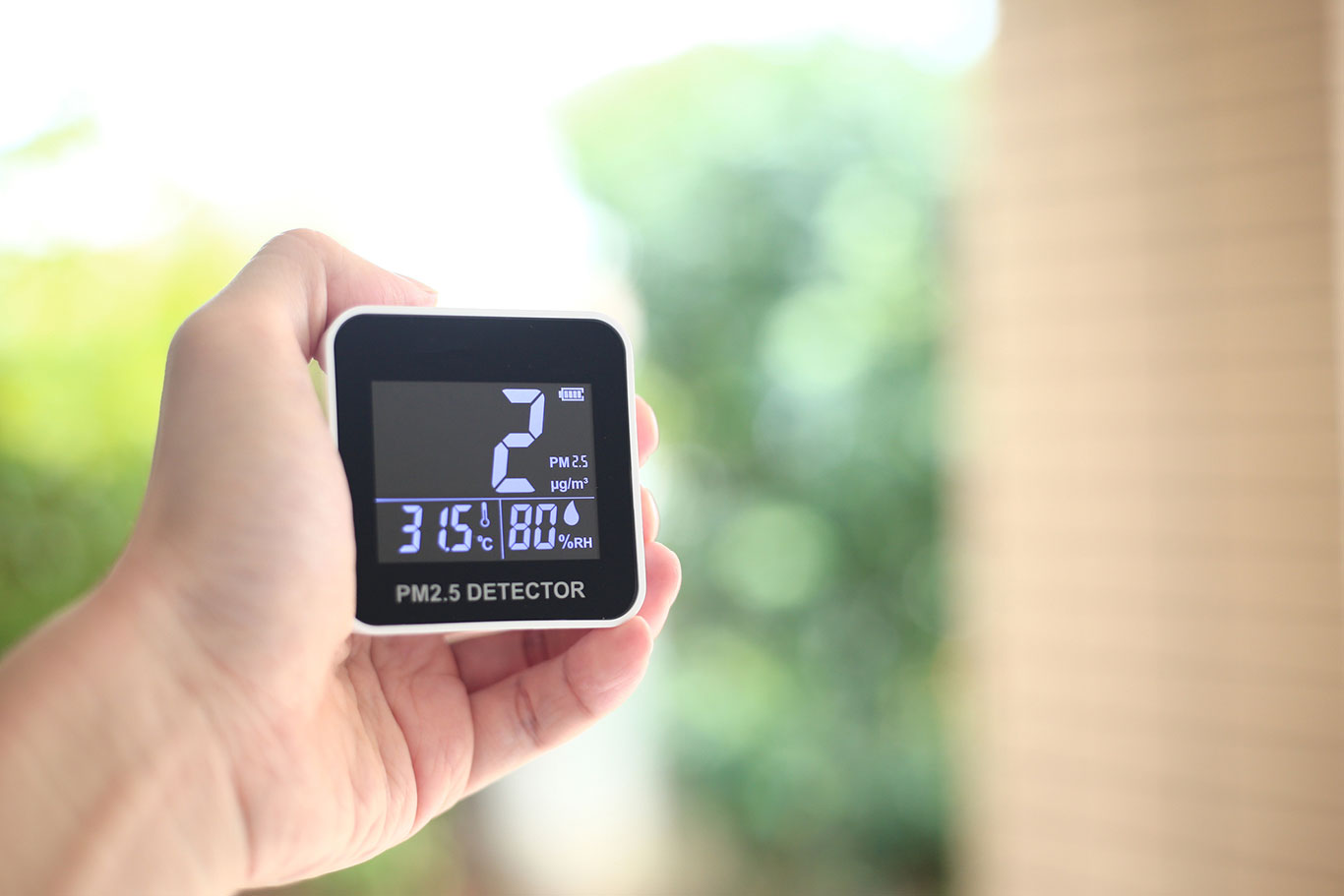
In UK planning and environmental regulation, air quality is a growing priority. From residential developments to commercial projects near busy roads, understanding how your scheme will affect local air pollution is vital to gaining approval.
While the term “air quality meter” may bring to mind simple consumer devices, in the context of planning, it refers to high-grade, calibrated equipment used by professional consultants to collect reliable, regulation-compliant data.
At Hawkins Environmental, we use specialist air quality meters as part of a wider air quality assessment service—helping developers navigate complex planning requirements with confidence.
What Is an Air Quality Meter in a Planning Context?
An air quality meter refers to professional monitoring instruments used to:
- Measure baseline pollution levels in a given area
- Assess air quality in relation to national standards
- Gather data to inform predictive modelling (e.g. traffic-related emissions)
These tools may track:
- Nitrogen Dioxide (NO?)
- Particulate Matter (PM?? and PM?.?)
- Volatile Organic Compounds (VOCs) (where relevant)
- Meteorological conditions that affect pollutant dispersion
Our meters are calibrated and deployed in accordance with DEFRA and IAQM guidelines, ensuring that the data we collect stands up to scrutiny from planning authorities.
When Is an Air Quality Meter Needed?
In many cases, air quality modelling alone (using tools like ADMS-Roads) is sufficient. However, for sensitive or high-risk sites, monitoring with an air quality meter may be required as part of a comprehensive assessment.
Common triggers include:
- Proximity to major roads or junctions
- Location within or near an Air Quality Management Area (AQMA)
- Planning applications that could increase vehicle traffic
- Objections from Environmental Health Officers or residents
We advise clients early in the project whether monitoring is necessary or if a desktop modelling-only approach is sufficient.
How We Use Air Quality Meters at Hawkins Environmental
At Hawkins Environmental, our process is tailored to ensure full compliance with local and national air quality requirements.
1. Initial Site Review
We assess the location, nearby pollution sources, and planning policy context to determine the right methodology.
2. Deployment of Monitoring Equipment
Where monitoring is appropriate, we install professional-grade air quality meters to gather baseline data over an appropriate period (usually a minimum of 3–6 months).
3. Detailed Modelling and Impact Assessment
We input monitoring results into our dispersion modelling software (e.g. ADMS) to predict how your development could affect future air quality.
4. Reporting for Planning Submission
We produce a detailed, planning-compliant air quality report including:
- Baseline pollution levels
- Predicted concentrations post-development
- Comparison with UK air quality objectives
- Recommendations and mitigation (if required)
Why DIY Air Quality Meters Aren’t Suitable
Low-cost, consumer-facing air quality meters are often used in homes and workplaces to provide general air quality awareness. However, they are not appropriate for planning or compliance purposes:
- Not calibrated to required standards
- Limited pollutant detection
- Cannot provide validated data for modelling or regulatory submission
- Unacceptable to planning authorities
For planning applications, only professionally deployed, consultant-led assessments using verified equipment will meet council expectations.
Why Choose Hawkins Environmental?
We’ve spent over 20 years delivering trusted air quality assessments for planning and development across the UK. With deep technical expertise, strong relationships with local authorities, and proven results, we help ensure that air quality is a strength—not a barrier—to your project.
Our service includes:
- Monitoring with certified air quality meters (when required)
- IAQM-compliant modelling and assessments
- Clear, tailored recommendations for mitigation
- Fast, responsive turnaround times
Visit our Air Quality Assessment page to learn more.
Phone: 01256 522332
Email: enquiry@hawkinsenvironmental.co.uk
Frequently Asked Questions (FAQs)
Q1: Are air quality meters always needed for a planning application?
A1: Not always. Many assessments can be completed using dispersion modelling alone. We’ll advise you if monitoring is necessary based on your site and project scope.
Q2: How long does air quality monitoring take?
A2: Valid baseline monitoring usually takes a minimum of 3–6 months, depending on local authority requirements and the site’s sensitivity.
Q3: Can I use a home or office air quality monitor for planning purposes?
A3: No. Only calibrated, professional equipment deployed by qualified consultants is suitable for planning applications and recognised by local authorities.