


When planning a new housing development, a noise impact assessment isn’t just a formality — it’s a key requirement that could determine the success or failure of your application. Local authorities demand clear, evidence-based reports to ensure that future residents won’t be adversely affected by environmental noise. In this guide, we explore why a professional noise impact assessment matters, what it involves, and how to get it right the first time.
Why Noise Matters in Residential Planning
With increasing pressure to build homes near busy roads, railways, and commercial zones, environmental noise has become a significant planning concern. The environmental noise impact assessment identifies potential noise sources and evaluates how they may affect the health, comfort, and wellbeing of future occupants.
Without a proper assessment, you risk delays, objections from Environmental Health Officers (EHOs), and potentially a rejected application.
What Is a Noise Impact Assessment?
A noise impact assessment is a technical report that evaluates the existing noise climate of a site and assesses the potential impact of noise on a proposed development. It’s usually required when:
- Housing is proposed near transport corridors (motorways, railways)
- The site is close to industrial or commercial premises
- There are existing concerns about environmental noise levels
It is often accompanied by a full noise impact survey, which includes on-site noise monitoring, modelling, and mitigation recommendations if needed.
The Process: From Survey to Submission
At Hawkins Environmental, our noise assessment services follow a proven process to ensure compliance with national and local planning policies.
1. Site Visit and Noise Monitoring
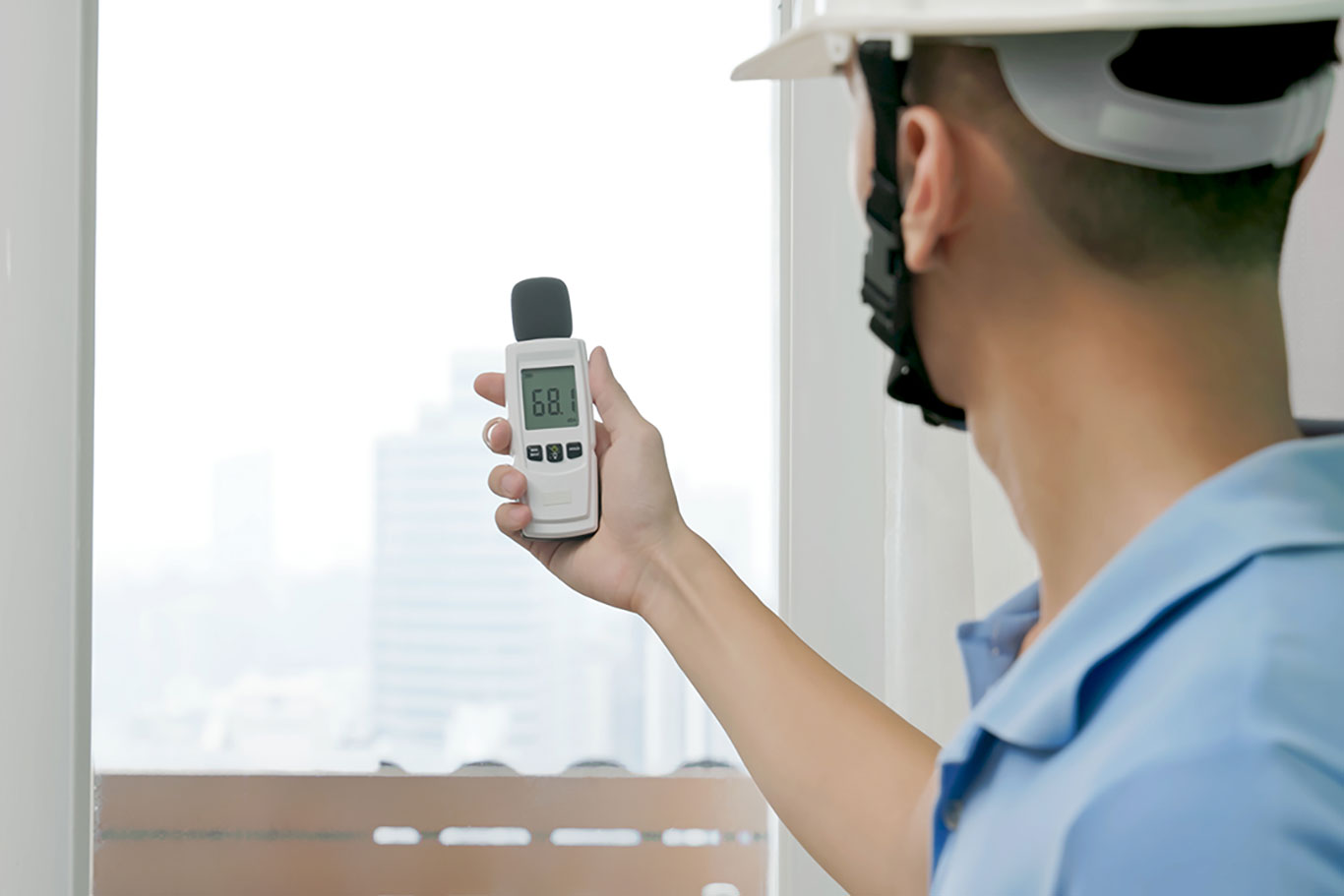
We conduct a noise assessment survey at the proposed development site. This involves measuring environmental noise levels over a representative period — typically 24 hours or longer — to capture peak and background noise conditions.
2. Data Analysis and Modelling
Using the latest software, we model how noise from nearby sources will interact with your development’s layout and building fabric. This may include façade calculations, glazing specifications, and outdoor amenity area assessments.
3. Recommendations and Reporting
The final noise impact assessment report outlines whether the site is suitable for residential use and what mitigation (if any) is required. Recommendations might include acoustic glazing, repositioning buildings, or installing acoustic fencing.
4. Submission to Planning Authority
Our reports are tailored for planning submission and meet the standards expected by local EHOs. We ensure they are clear, detailed, and defensible — reducing the risk of follow-up queries or rejections.
When Is a Full Noise Impact Survey Required?
A full noise impact survey is typically necessary when:
- The development is located near major transport infrastructure
- The site is adjacent to commercial or industrial uses
- The planning officer or EHO requests one as part of validation
If you’re unsure whether your project needs one, we’re happy to advise — early engagement can save you time and cost.
Why Work With Hawkins Environmental?
With decades of experience in noise assessment for planning applications, Hawkins Environmental provides practical, planning-ready reports across the UK — including Basingstoke and surrounding areas. We understand what local authorities need and deliver high-quality noise impact assessment services that support successful applications.
Learn more about our noise assessments
A professional noise impact assessment is essential for securing planning permission for housing developments in noise-sensitive areas. By working with experts like Hawkins Environmental, you can demonstrate compliance, reduce delays, and protect future residents from unwanted environmental noise.
Don’t risk planning refusal — get ahead with a trusted assessment.
Phone: 01256 522332
Email: enquiry@hawkinsenvironmental.co.uk
View our Noise Assessment Services
Frequently Asked Questions (FAQs)
Q1: How long does a noise impact assessment take?
A1: Typically, the full process takes 1–2 weeks depending on the site’s complexity and weather conditions for monitoring. Early booking ensures timely delivery.
Q2: What does a noise impact assessment cost?
A2: Costs vary depending on the site and scope of work. A full noise impact survey cost starts from around £1,200 + VAT. Contact us for a tailored quote.
Q3: Can I submit my planning application without a noise assessment?
A3: You can, but if the council requests it later, your application may be delayed. It’s best to check the local validation checklist or speak to us for guidance.