

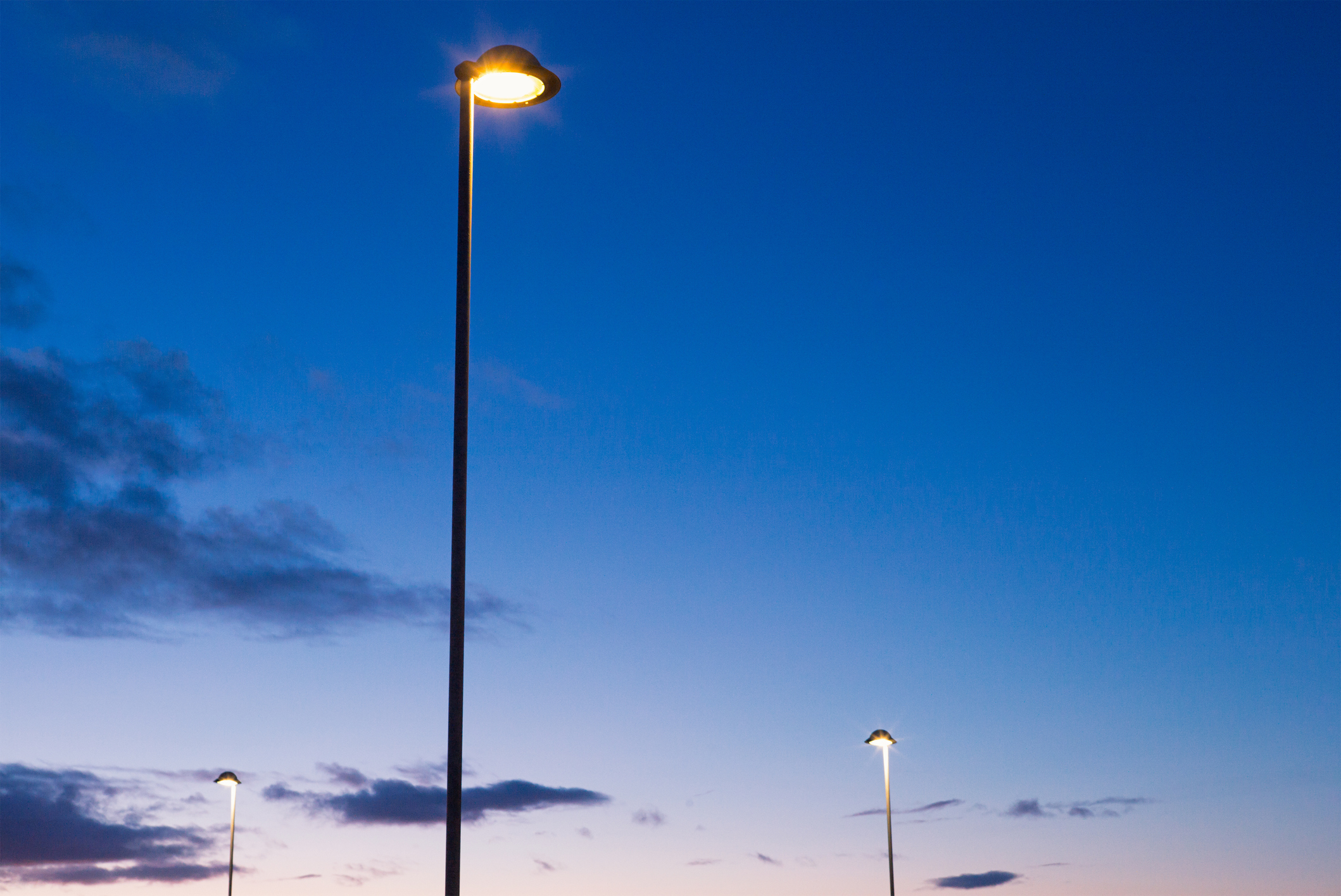
A lighting impact assessment may be required where a proposed development introduces new external lighting that could affect nearby homes, roads, neighbouring land or the wider night-time environment.
The need for assessment depends on the type of development, the location, the scale of the proposed lighting and the sensitivity of surrounding receptors.
For some developments, lighting is relatively limited and can be dealt with through straightforward design information. For others, particularly larger commercial, industrial, transport or sports-related schemes, the potential effects may need to be considered more formally as part of the planning process.
The purpose of a lighting impact assessment is not simply to determine whether a site will be brightly lit. It considers whether the proposed lighting is appropriate for the location and whether it could create effects such as glare, excessive light spill or unnecessary upward light.
Why can external lighting become a planning issue?
Artificial lighting is often necessary for safety, security, access and the practical operation of a development.
Problems can arise when light extends beyond the area it is intended to illuminate.
For example, a lighting scheme may produce excessive brightness at nearby residential windows, create glare for road users or illuminate surrounding areas unnecessarily.
The potential impact depends on several factors, including the height and orientation of luminaires, the intensity of the light, hours of operation and the characteristics of the surrounding area.
A lighting scheme that is acceptable in a busy commercial area may not be appropriate in a quieter or darker setting.
Planning authorities can therefore require sufficient information to understand whether external lighting has been designed with the surrounding environment in mind.
Which commercial and industrial developments may need assessment?
Commercial and industrial developments are among the projects most likely to require consideration of lighting impacts.
Sites such as warehouses, distribution centres, industrial estates and larger commercial premises may require substantial external lighting around buildings, loading areas, access roads and car parks.
These developments can be particularly relevant where they operate during the evening or throughout the night.
A distribution facility, for example, may need lighting for vehicle manoeuvring and loading activity long after surrounding residential properties are in darkness.
The key issue is not whether the business needs lighting. It is whether that lighting has been designed so that necessary illumination is provided without creating unreasonable effects beyond the site.
Where sensitive properties are located nearby, a formal assessment can help demonstrate this.
Do warehouses and logistics developments commonly need lighting impact assessments?
They can.
Modern logistics and warehousing schemes often have relatively large external areas that need to remain operational in low-light conditions.
Lighting may be required for loading bays, service yards, vehicle routes, parking areas, pedestrian routes and site security.
The size of these developments can mean that a significant number of luminaires are proposed.
They may also operate during early mornings, evenings or overnight, increasing the importance of controlling light outside the site boundary.
The assessment can examine the proposed lighting layout and identify whether light is likely to extend towards nearby receptors.
If potential problems are found, the design can often be adjusted before the scheme is finalised.
Can residential developments require lighting assessments?
Yes, although the need will depend on the scale and nature of the development.
Larger residential projects may include lighting for estate roads, communal areas, pedestrian routes, parking areas and shared outdoor spaces.
These schemes can become particularly sensitive where new lighting is proposed near existing homes or where a development is being introduced into an otherwise relatively dark location.
The planning issue may therefore involve both the effect on existing residents and the wider character of the area.
Smaller residential developments are less likely to require a detailed lighting impact assessment unless there is a specific concern.
A proportionate approach is important. The level of assessment should reflect the potential impact rather than treating every lighting proposal in the same way.
What about retail parks and commercial developments?
Retail developments can involve extensive external lighting.
Car parks, store entrances, service areas, advertising features and pedestrian routes may all need illumination.
In locations close to residential properties, this can create potential concerns about light spill or glare during evening operating hours.
The same principle applies to business parks and mixed commercial developments.
Where several lighting sources are proposed across a large site, the cumulative effect should be considered rather than assessing individual fittings in isolation.
A lighting impact assessment can help demonstrate how the overall scheme has been designed and whether the effects beyond the site are likely to remain appropriate.
Do sports facilities need lighting impact assessments?
Sports facilities are another common example.
Floodlighting can produce relatively high levels of illumination because playing surfaces need to be lit sufficiently for participants and, in some cases, spectators.
Football pitches, tennis courts and other outdoor sports facilities can therefore attract planning scrutiny, especially where they are close to residential properties.
The direction, height and intensity of floodlights all influence their potential effect.
Hours of use can also be particularly important.
A well-designed sports lighting scheme should aim to direct light onto the playing area rather than allowing unnecessary spill into surrounding properties or the night sky.
Where neighbouring homes are relatively close, detailed assessment may help demonstrate whether the proposed design is acceptable.
Can car parks require assessment?
Large car parks may require assessment where lighting could affect nearby receptors.
Commercial developments, transport facilities, employment sites and other large schemes may include many individual lighting columns.
Although each fitting may be designed primarily to illuminate the parking area below, the combined effect can become significant if the scheme is poorly designed.
The assessment can consider whether light reaches neighbouring windows, roads or surrounding land.
It can also examine whether luminaires are positioned and aimed appropriately.
This is particularly relevant where a car park operates late into the evening or overnight.
What developments involving roads or transport may need lighting consideration?
Developments involving access roads, transport infrastructure or significant vehicle movements may also require careful lighting design.
Lighting may be necessary to support visibility and safe movement around junctions, service roads or transport areas.
However, glare needs to be controlled so that lighting designed to improve safety does not itself become distracting.
Where the development sits near existing roads, neighbouring businesses or residential properties, the relationship between the proposed lighting and surrounding receptors may need to be assessed.
The design should provide the illumination required for the development while avoiding unnecessary brightness beyond the intended area.
What does a lighting impact assessment examine?
The precise scope depends on the development, but the assessment normally considers how the proposed lighting interacts with the surrounding environment.
This may include:
- potential light spill towards neighbouring residential windows or other sensitive receptors
- glare, excessive brightness, upward light and the relationship between the proposed scheme and its environmental setting
The consultant may review lighting calculations, luminaire positions, mounting heights, orientation and operating hours.
The surrounding environment also needs to be understood.
A development in an established urban commercial area is different from a project on the edge of a settlement or in a location with lower existing levels of artificial lighting.
The assessment therefore considers both the lighting scheme itself and the context into which it will be introduced.
What is obtrusive light?
Obtrusive light is unwanted artificial light that extends beyond the area where it is required.
This can take several forms.
Light trespass occurs when unwanted illumination reaches neighbouring property. Glare can result when a bright light source causes discomfort or interferes with visibility. Upward light can contribute to unnecessary illumination of the night sky.
A good lighting scheme aims to minimise these effects while still providing enough illumination for the development to function safely and effectively.
This does not necessarily mean reducing lighting across the whole site.
Often, improvements can be achieved through better positioning, specification and control of luminaires.
How can lighting design reduce planning risks?
Lighting impacts are often easier to manage when they are considered during the design stage.
Rather than designing the entire development and reviewing the lighting impact afterwards, the project team can consider likely sensitive receptors while deciding where and how luminaires should be installed.
Possible measures can include changing luminaire orientation, selecting more suitable fittings, adjusting mounting heights, reducing unnecessary brightness or introducing controls that limit lighting during periods when full illumination is not needed.
The surrounding buildings and landscaping may also influence how light travels across the site.
This makes lighting assessment particularly useful as a design tool.
If the consultant identifies potential issues while the scheme is still flexible, the lighting designer may be able to resolve them without major changes to the wider development.
Developers dealing with several planning-related environmental issues can review Hawkins Environmental’s environmental services to understand how technical assessment can be incorporated into the wider design process.
Does every development with external lighting need a formal assessment?
No.
The presence of external lighting does not automatically mean that a detailed lighting impact assessment will be required.
The need depends on the scale of the proposal, existing lighting conditions, proximity of sensitive receptors and likelihood of a material planning effect.
For a relatively small development with limited, well-contained lighting, detailed technical work may not be justified.
By contrast, a large development operating at night and located close to homes may require considerably more evidence.
Early advice can help establish the appropriate level of assessment.
This can prevent developers from commissioning unnecessary work while also reducing the risk of reaching planning submission without information that the local authority is likely to request.
When should lighting impacts be assessed?
Where a development is likely to require substantial external lighting, assessment should ideally take place while the lighting design is still being developed.
This gives the project team time to respond if potential issues are identified.
If the assessment is left until the planning application is almost complete, options may become more limited.
For example, lighting columns may already have been positioned around fixed site layouts, making later changes more difficult.
Early assessment is particularly valuable where there are sensitive residential properties nearby, long operating hours, significant floodlighting or a location with relatively low existing levels of artificial light.
Developers who are unsure whether an assessment will be necessary can contact Hawkins Environmental at an early stage to discuss the development and surrounding environment.
Frequently Asked Questions
Are lighting impact assessments only required for large developments?
No. Larger projects are generally more likely to require assessment, but a smaller development may still need one if powerful lighting is proposed close to sensitive properties or within a particularly sensitive location.
Can a lighting assessment be carried out before the final lighting design exists?
Yes. Early-stage assessment can help identify likely constraints and guide the developing lighting design. More detailed calculations can then be reviewed once the proposed scheme has been refined.
Can LED lighting reduce lighting impacts?
LED technology can allow good control over the direction and output of external lighting, but using LEDs does not automatically prevent obtrusive light. The positioning, specification, orientation and operation of each fitting remain important.
Identifying lighting impacts before planning submission
Lighting impact assessments are commonly associated with developments that require significant external illumination, including industrial sites, warehouses, logistics centres, retail developments, sports facilities, car parks and some larger residential schemes.
Whether a particular project requires formal assessment ultimately depends on its individual characteristics.
The scale and intensity of the lighting, operating hours, surrounding land uses and proximity of sensitive receptors all influence the potential effect.
Considering these factors early allows the project team to design the lighting around the needs of both the development and its surroundings.
This can reduce the risk of avoidable planning concerns and produce a more appropriate lighting scheme from the outset.
If you are preparing a development that includes substantial external lighting, Hawkins Environmental can help assess potential effects and provide planning-related lighting advice. Contact Hawkins Environmental to discuss the proposed scheme and likely assessment requirements.
Phone: 01256 522332
Email: enquiry@hawkinsenvironmental.co.uk
Find out more: hawkinsenvironmental.co.uk