


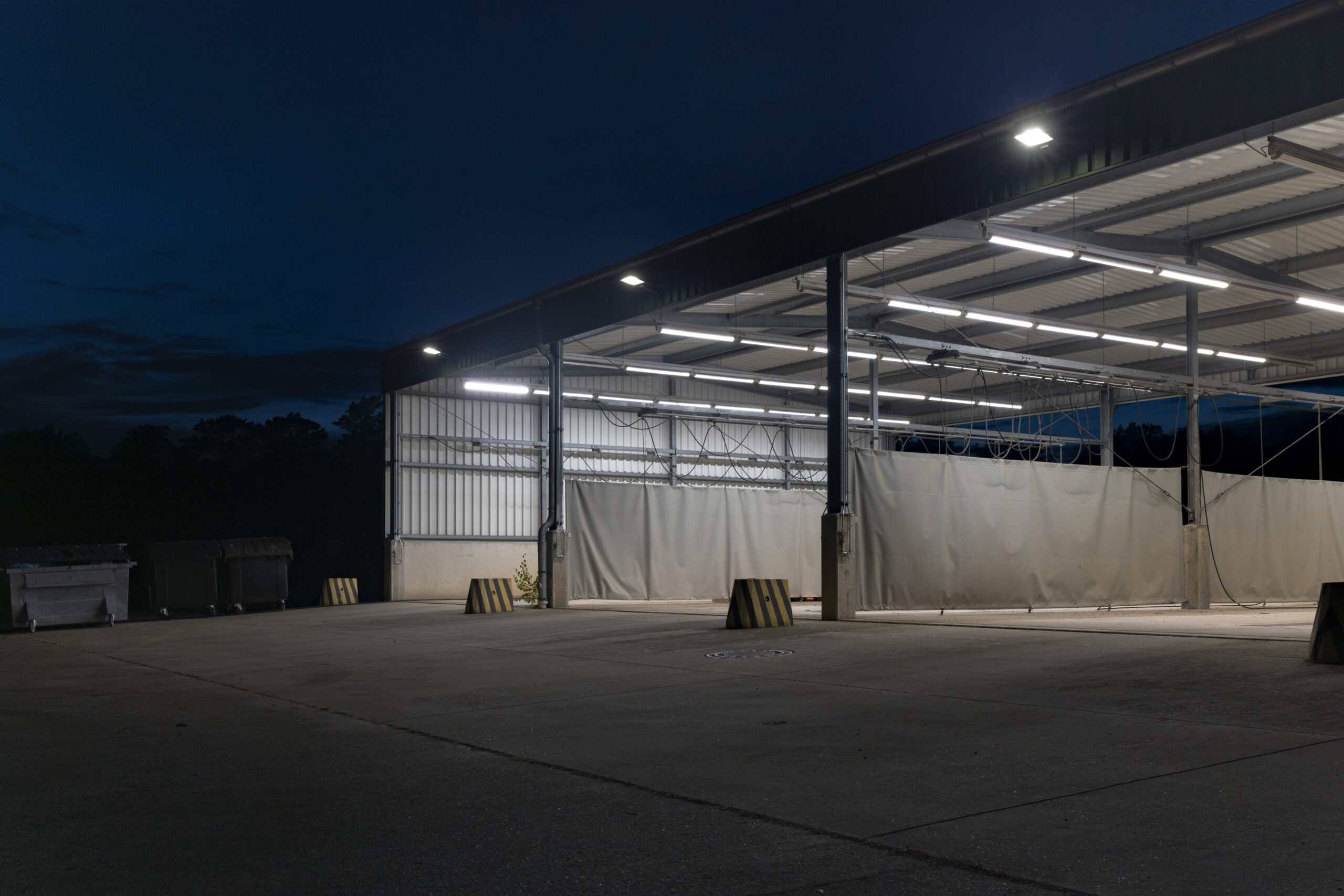
Obtrusive light is artificial light that causes an unwanted or avoidable impact beyond the area it is intended to illuminate. In planning and environmental assessment, it can include light spilling into neighbouring windows, glare affecting residents or drivers, upward light contributing to sky glow, and poorly controlled lighting affecting the character of an area.
Obtrusive light is important because external lighting can affect residential amenity, highway safety, ecology, landscape character and the overall acceptability of a development. For many commercial, industrial, sports, education, residential and mixed-use schemes, lighting is not simply a design detail. It can become a material planning consideration.
A lighting assessment helps planning authorities understand whether proposed lighting is appropriate for the site, whether it could affect nearby receptors, and what measures are needed to control its impact.
What Does Obtrusive Light Mean?
Obtrusive light occurs when artificial light goes where it is not needed or creates an unreasonable effect. Good lighting should illuminate the intended task area safely and efficiently. Poorly designed lighting can spill beyond the site boundary, shine into nearby properties, create glare or brighten the night sky unnecessarily.
This does not mean all external lighting is a problem. Many developments need lighting for access, safety, security, servicing and operational use. The issue is whether the lighting is proportionate, well directed and suitable for the surrounding environment.
For planning purposes, obtrusive light is usually considered in relation to sensitive receptors. These may include nearby homes, roads, ecological habitats, rural landscapes, dark-sky areas, neighbouring businesses or future occupants of a development.
The Institute of Lighting Professionals publishes GN01, Guidance Notes for the Reduction of Obtrusive Light, which is widely used in UK planning and lighting assessment work. The 2021 guidance reflects updated international guidance from CIE 150:2017 and provides a framework for assessing and reducing obtrusive light.
What Are the Main Types of Obtrusive Light?
Obtrusive light is not one single issue. It can take several forms, and each one may need to be assessed differently.
Spill light
Spill light is light that falls outside the area it is intended to illuminate. A common example is a car park light, floodlight or security light shining into a neighbouring bedroom window.
In planning terms, spill light can be important where external lighting is close to homes, care facilities, hotels, student accommodation or other sensitive uses. It may also affect open land, ecological corridors or rural edges where low light levels are expected.
The issue is not only whether a light source is visible. It is whether the level of light reaching a receptor is appropriate for the surrounding environmental zone and the time of use.
Glare
Glare occurs when a light source is uncomfortably bright or visually intrusive. It can affect residents, pedestrians, drivers, cyclists and people using nearby land.
For example, poorly angled floodlights on a sports pitch may create glare for nearby homes or road users. Bright car park lighting may affect drivers if luminaires are not properly shielded or directed. Security lighting can also cause glare if it is mounted too high, aimed incorrectly or left on unnecessarily.
Glare can be particularly important where lighting is visible from roads or where the development is close to residential windows.
Sky glow
Sky glow is the brightening of the night sky caused by artificial light being emitted upwards or reflected into the atmosphere. It is often associated with urban areas, but individual developments can still contribute to the problem if lighting is poorly controlled.
Sky glow matters because it can affect the character of rural areas, dark landscapes and places where night-time darkness is valued. It can also be relevant near sensitive ecological habitats.
Reducing upward light, avoiding over-lighting and using well-controlled luminaires can help limit sky glow.
Light source intensity
Light source intensity refers to the brightness of the visible light source from a particular direction. Even where spill light levels are controlled, a visible luminaire may still feel intrusive if it is very bright or poorly positioned.
This is why lighting assessment often considers more than just ground-level illumination. The direction, mounting height, beam angle, shielding and visibility of the luminaire all matter.
Why Does Obtrusive Light Matter in Planning?
Obtrusive light matters in planning because lighting can affect whether a development is acceptable in its setting.
Planning authorities need to consider how a proposal will affect existing neighbours, future occupants, local character and environmental conditions. If external lighting is likely to cause unacceptable glare, excessive spill light or unnecessary sky glow, the authority may ask for a lighting assessment, request design changes or attach planning conditions.
The UK Government’s planning guidance on light pollution explains that artificial light can be a nuisance, affect people’s health, disturb wildlife, waste energy and reduce views of the night sky. It also confirms that lighting may be relevant to planning decisions where it affects amenity, safety or environmental quality. (gov.uk)
For developers, this means lighting should be considered before details are finalised. A scheme may need to show that lighting levels, luminaire positions, operating hours and control measures have all been considered properly.
What Developments Commonly Need a Lighting Assessment?
Lighting assessment may be required for a wide range of developments, particularly where new external lighting is proposed close to sensitive receptors.
Common examples include commercial sites, industrial units, warehouses, logistics yards, car parks, schools, sports facilities, residential developments, mixed-use schemes, hotels, public realm schemes and infrastructure projects.
Assessment is more likely where lighting is proposed near homes, roads, open countryside, ecological habitats or sites with a lower existing level of night-time lighting. It may also be needed where the development introduces tall lighting columns, floodlights, large illuminated areas or lighting that operates late at night.
A small lighting installation in an already well-lit urban area may need less detailed consideration than a large floodlit facility on the edge of a village. The key issue is whether the lighting could create a material impact in context.
How Does Obtrusive Light Affect Neighbouring Properties?
Neighbouring properties are often the most immediate concern in planning lighting assessments.
External lighting can affect residents if light spills into windows, if glare is visible from living spaces or bedrooms, or if lighting changes the night-time character of a property. This can be particularly sensitive where homes are close to car parks, access roads, service yards, sports pitches or commercial premises.
For example, a proposed commercial yard may need lighting for safe operation, but if lights face directly towards nearby homes, the impact may be unacceptable without mitigation. Similarly, a residential development near existing floodlighting may need to consider whether future occupants will experience poor amenity.
A lighting assessment can help quantify the likely impact and recommend adjustments such as repositioning luminaires, reducing output, adding shielding, lowering column heights or limiting hours of use.
How Can Obtrusive Light Affect Roads and Safety?
Lighting can support safety, but poorly controlled lighting can create safety concerns.
Glare from bright or incorrectly aimed luminaires may distract drivers or reduce visibility. Sudden contrast between dark and brightly lit areas can also affect how people perceive their surroundings. This is particularly relevant near road junctions, access points, car parks and pedestrian routes.
A well-designed lighting scheme should provide sufficient illumination for the intended task while avoiding unnecessary brightness and glare. More light is not always better. Over-lighting can create harsh contrasts, waste energy and increase the risk of complaints.
For planning applications involving vehicle access, service yards or car parks, the lighting design may need to demonstrate that it supports safe use without creating unacceptable effects beyond the site.
Why Are Environmental Zones Important?
Environmental zones help determine what lighting levels may be appropriate for a location. A city centre, suburban street, rural village edge and protected dark landscape will not all have the same sensitivity to light.
The ILP guidance uses environmental zones to reflect the existing night-time character of an area. In simple terms, lower-light environments require stricter control, while brightly lit urban areas may tolerate higher levels of artificial light.
This matters because a lighting scheme should be judged against its context. A level of lighting that may be acceptable in an urban commercial area could be intrusive in a rural or low-light setting.
Understanding the environmental zone can help project teams design lighting that is proportionate from the outset.
How Can Obtrusive Light Be Reduced?
Obtrusive light can often be reduced through good lighting design rather than simply removing lighting altogether.
Common mitigation measures include using well-shielded luminaires, directing light only where needed, avoiding upward light, selecting suitable mounting heights, reducing light output, using warmer colour temperatures where appropriate, setting sensible operating hours and using timers, dimming or motion controls.
Designers can also reduce impact by considering the position of lighting columns, the angle of fittings, the proximity of sensitive receptors and the relationship between lighting and site boundaries.
In many cases, small design changes can make a significant difference. For example, a luminaire angled away from a neighbouring window, fitted with shielding or controlled by a curfew can reduce the likelihood of complaints and planning concerns.
Are LEDs Relevant to Obtrusive Light?
LED lighting can be efficient and controllable, but it still needs careful design. The fact that a light fitting uses LED technology does not automatically mean it will have a low environmental impact.
Poorly designed LED installations can still cause glare, spill light and sky glow. In some cases, overly bright or cool white lighting can feel harsh in sensitive settings.
The advantage of modern lighting is that it can often be better directed and controlled than older lighting systems. Dimming, sensors, timers and improved optics can all help reduce unnecessary light. However, the design must still be appropriate for the site.
This is particularly relevant where lighting is proposed near homes, rural edges, ecological habitats or low-light environments.
How Do Lighting Assessments Support Planning Applications?
A lighting assessment supports a planning application by showing how lighting has been considered, what impacts may occur and how those impacts will be controlled.
The assessment may review proposed lighting layouts, luminaire specifications, mounting heights, orientation, predicted light spill, glare and sky glow. It may also compare the scheme against relevant guidance and environmental zone criteria.
For planning officers, this provides evidence that lighting is suitable for the location. For developers and design teams, it can reduce uncertainty and help avoid late changes.
Lighting assessments are particularly useful where a scheme has already raised concern from neighbours, environmental health officers or planning consultees. They can also help demonstrate that proposed lighting is necessary, proportionate and controlled.
For related planning support, Hawkins Environmental’s services page outlines the environmental assessment work available for development projects. You can also use the contact page to discuss site-specific lighting assessment requirements.
Frequently Asked Questions
What is the difference between light pollution and obtrusive light?
Light pollution is a broad term for unwanted or excessive artificial light. Obtrusive light is more specific and usually refers to light that causes a measurable or noticeable impact, such as spill light, glare or sky glow.
Does all external lighting need a lighting assessment?
No. Not every external light requires a full assessment. A lighting assessment is more likely to be needed where lighting is close to sensitive receptors, operates at night, involves floodlighting or could affect amenity, safety, ecology or landscape character.
Can planning conditions control obtrusive light?
Yes. Planning conditions may require lighting to be installed in accordance with approved details, limit operating hours, control lux levels, require shielding or prevent changes without further approval.
Is LED lighting always better for reducing obtrusive light?
Not automatically. LED lighting can be efficient and controllable, but poor design can still cause glare, spill light and sky glow. The quality of the design matters more than the technology alone.
Why should obtrusive light be considered early?
Early consideration allows lighting to be integrated into the site design. This makes it easier to avoid conflicts with neighbours, highways, ecology and planning policy before the application is submitted.
Summary
Obtrusive light is unwanted artificial light that affects areas, people or environments beyond the intended lighting zone. It can include spill light into windows, glare towards residents or drivers, upward light contributing to sky glow and lighting that is inappropriate for the character of a location.
It matters because lighting can influence residential amenity, safety, landscape character, ecological sensitivity and planning acceptability. A scheme that appears straightforward during the day may create planning concerns once its night-time lighting effects are considered.
The best approach is to design lighting carefully from the outset. By controlling direction, brightness, operating hours, shielding and layout, many obtrusive light issues can be avoided or reduced.
If your development may require a lighting assessment, Hawkins Environmental can provide practical, planning-focused advice based on the proposed scheme, site context and local authority requirements.
Phone: 01256 522332
Email: enquiry@hawkinsenvironmental.co.uk
Find out more: https://hawkinsenvironmental.co.uk/