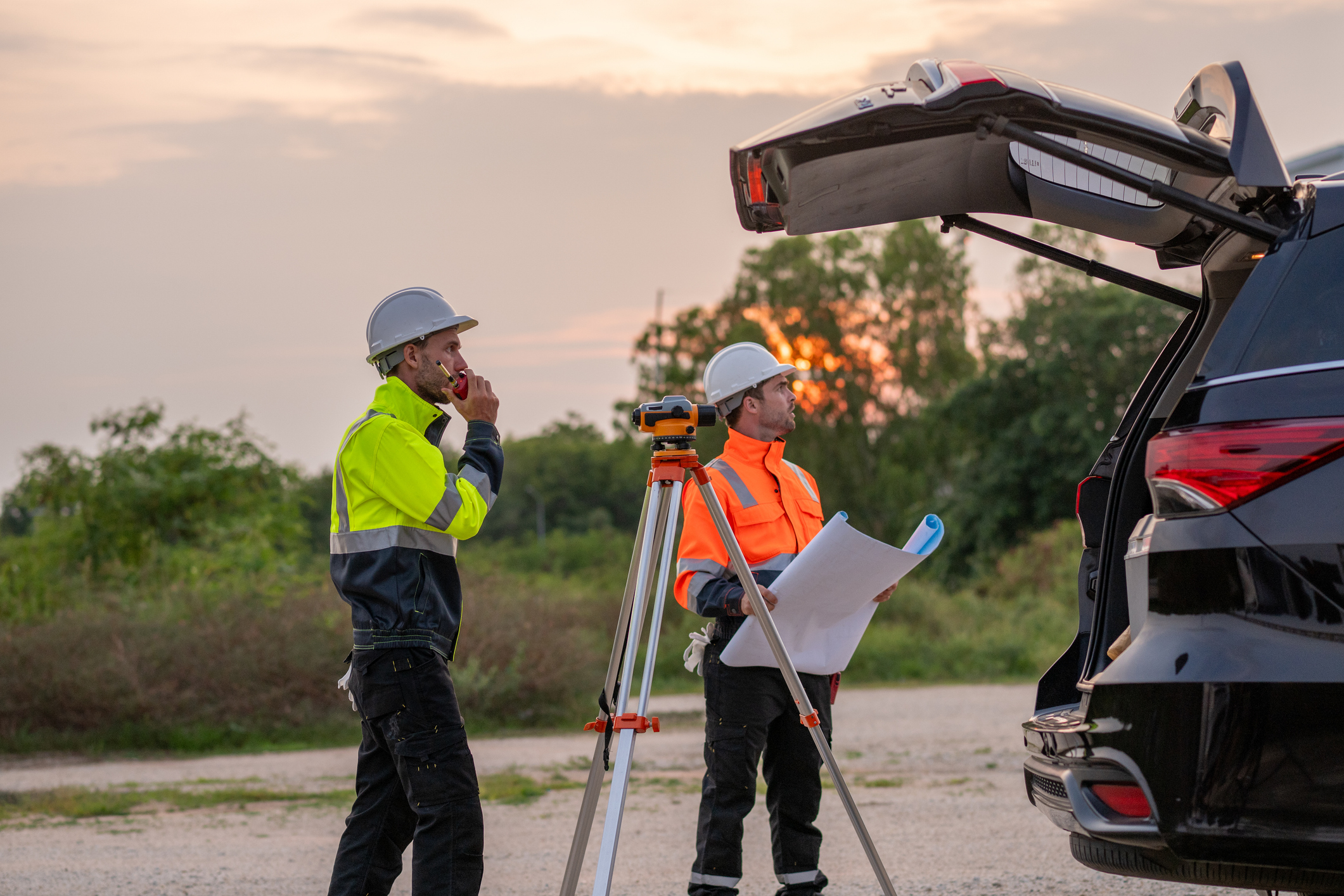



Environmental assessments have become an increasingly important part of UK planning because development proposals are expected to demonstrate how potentially significant environmental effects have been considered.
For many projects, planning is no longer simply about whether a building fits within a particular site boundary. The relationship between a proposed development and its surroundings can also be critical.
Issues such as air quality, environmental noise, daylight and sunlight, and external lighting may influence whether a site is suitable for its intended use, how buildings should be positioned and whether nearby properties could experience unacceptable effects.
This does not mean that every development requires a large collection of technical reports. Planning-related assessment should be proportionate to the site and proposal.
However, where an environmental issue could materially affect the planning decision, providing appropriate evidence can help planning authorities understand the likely impacts and make an informed judgement.
For developers, the growing importance of environmental assessment also makes early technical input increasingly valuable.
What role do environmental assessments play in planning applications?
Environmental assessments provide technical evidence about how a proposed development may interact with its surroundings.
A planning authority needs sufficient information to understand both the benefits and potential effects of a proposal. Where environmental matters are relevant, an assessment can help turn a general concern into something that can be considered objectively.
For example, there is a significant difference between saying that a proposed building “might reduce daylight” and calculating how the development is predicted to affect natural light at relevant neighbouring windows.
Likewise, stating that a site is “close to a noisy industrial area” does not establish what the actual acoustic environment is or whether the proposed development can provide suitable conditions for future occupants.
Technical environmental work can provide this additional evidence.
Depending on the development, Hawkins Environmental’s relevant planning work can include:
- air quality assessment
- environmental noise assessment
- daylight and sunlight assessment
- lighting impact assessment
The purpose of these assessments is not simply to produce another document for the planning application. Each should address a specific potential environmental issue and explain its significance in the context of the proposed development.
Why is the surrounding environment becoming more important?
Many development sites involve close relationships between different land uses.
New homes may be proposed beside existing commercial or industrial premises. Urban development can place taller buildings close to established residential properties. Commercial schemes may require significant external lighting near sensitive receptors. Sites beside heavily trafficked roads may need careful consideration of air quality.
These relationships can create potential conflicts if they are not understood before the development is designed.
A vacant or underused site may initially appear suitable for development, but environmental conditions surrounding that site can affect what can reasonably be achieved.
An industrial operation may influence noise levels.
Nearby buildings can affect daylight availability.
Traffic conditions can influence local air quality.
A relatively dark location may make a large new lighting scheme more noticeable than it would be within an established commercial area.
Environmental assessment therefore helps project teams understand the context in which development is being proposed rather than considering the site in isolation.
Why do planning authorities need technical evidence?
Planning decisions need to be based on evidence where technical environmental effects are material.
Some concerns can be considered through plans, site visits and planning judgement alone. Others require specialist analysis.
If a development is likely to affect neighbouring daylight, for example, architectural drawings may show the relationship between buildings but do not necessarily quantify the expected change in natural light.
Similarly, the presence of an industrial building close to proposed homes does not by itself establish whether noise levels will be acceptable.
Environmental assessment helps fill this evidence gap.
A properly prepared report should explain what was assessed, which information was used, the methodology applied, the results obtained and what those results mean for the proposed development.
This gives planning officers and relevant technical consultees a clearer basis on which to evaluate the application.
It can also help distinguish between a genuine environmental constraint and a concern that appears significant initially but is shown through assessment to have a relatively limited effect.
Which developments are most likely to need environmental assessment?
There is no single category of development that automatically requires every form of environmental assessment.
Requirements depend on the characteristics of the proposal and its surroundings.
A residential development beside a major road may raise air quality and noise considerations.
A taller infill scheme close to existing homes could require daylight and sunlight assessment.
A logistics development operating into the evening may require both noise and lighting assessment.
An industrial or commercial proposal introducing significant vehicle activity may need consideration of potential changes in local air quality.
The appropriate approach should therefore be determined on a project-by-project basis.
This is an important part of proportionate environmental consultancy.
Developers should not commission reports simply because they are commonly seen on other applications. Equally, a foreseeable environmental constraint should not be ignored because another development did not require the same assessment.
The site, proposal and potential receptors need to be considered together.
Why is early environmental assessment becoming more valuable?
One of the biggest advantages of environmental assessment is that it can influence a project before the design becomes fixed.
If assessment is treated solely as a final planning submission exercise, its findings may arrive too late to be used effectively.
Consider a proposed residential building next to an industrial site.
If noise assessment is undertaken while the layout is still flexible, the findings may help the architect position less sensitive spaces towards the noisier side of the site and bedrooms or living spaces in more protected locations.
If exactly the same assessment is commissioned after the internal layout has been finalised, there may be fewer practical options available.
A similar principle applies to other environmental disciplines.
Daylight analysis can help identify which parts of a building’s height or massing have the greatest effect on neighbouring properties.
Lighting assessment can influence luminaire positions and specifications.
Air quality assessment can help identify whether particular areas of a site require further consideration.
Environmental information is often most valuable when it informs these decisions rather than merely explaining them retrospectively.
How can environmental assessments improve development design?
Good environmental assessment should help the project team understand where constraints exist and how important they are.
This can allow mitigation to be incorporated into the design itself.
For noise, this could involve building orientation, internal room arrangements or consideration of facade performance.
For daylight and sunlight, it could involve adjustments to height, massing or separation distances.
For external lighting, it may involve better luminaire positioning, control of light output or changes to operating arrangements.
For air quality, the assessment may influence how sensitive uses are positioned relative to significant pollution sources.
Not every assessment will result in design changes.
A study may conclude that the predicted effects are sufficiently limited that no substantial mitigation is required.
That is still valuable information because the project team and planning authority have an evidence-based understanding of the issue.
The important point is that technical assessment gives designers and planners something more useful than assumption.
Can environmental assessments help avoid conflicts between different land uses?
Yes, particularly where sensitive development is being introduced close to existing commercial or industrial activity.
This has become an important consideration as development takes place on sites where different uses are located close together.
Suppose an established industrial premises creates noise as part of its normal operations.
If new residential development is introduced immediately beside it without proper acoustic consideration, future occupants may experience disturbance and complaints may follow.
This can create difficulties for residents as well as the existing business.
Assessing the environment before the development is completed allows the project team to understand that relationship and determine whether appropriate design measures are required.
The same general principle applies to lighting and other environmental effects.
New development should take account of the conditions that already exist around the site rather than assuming those conditions will change to accommodate the proposal.
Why can delaying an assessment create planning problems?
Environmental work takes time to scope, undertake and interpret properly.
Where surveys or project-specific information are needed, leaving assessment until just before submission can place unnecessary pressure on the planning programme.
There is also a risk that the planning authority will request information that the application does not contain.
If an environmental issue is foreseeable and potentially material, addressing it before submission is usually more efficient than responding after the application is already being determined.
Late assessment can also reveal design problems.
At that point, changing building layouts, elevations or specifications may require additional architectural work and coordination across the project team.
Early consideration does not eliminate all risk of further planning questions, but it can reduce avoidable uncertainty.
Developers can review Hawkins Environmental’s environmental services when establishing which planning-related assessments may be relevant to a proposed scheme.
Are environmental assessments becoming more detailed?
The level of detail required depends largely on the complexity and potential impact of the proposal.
For some developments, a relatively straightforward assessment may be sufficient.
Others require detailed modelling, measurements or calculations.
What matters is that the assessment method is appropriate to the question being considered.
For example, detailed dispersion modelling may be necessary for some air quality assessments, while other proposals can be considered using more proportionate evidence.
Environmental noise assessment may require measurements during representative operating periods.
Daylight and sunlight work may involve modelling the existing and proposed building arrangements.
Lighting assessment can require consideration of predicted light levels at surrounding receptors.
More technical analysis should not be viewed as inherently better. The most useful assessment is one that provides enough reliable evidence to answer the planning question without introducing unnecessary work.
Does every environmental concern require monitoring?
No.
Different environmental disciplines use different assessment methods, and the word “assessment” should not be assumed to mean continuous on-site monitoring.
This is particularly important for air quality.
For many development-related air quality assessments, existing data and established modelling techniques can provide the evidence required without project-specific monitoring.
Where air quality monitoring genuinely is necessary, Hawkins Environmental advises that meaningful monitoring generally requires a considerably longer period than a few weeks, typically at least three to six months.
Environmental noise assessment is different because site measurements are commonly required to characterise the acoustic environment.
This illustrates why environmental requirements should be discussed with an appropriately experienced consultant rather than assuming the same process applies to every discipline.
How do assessments support better planning decisions?
Environmental assessment helps both applicants and decision-makers understand the likely consequences of development.
For the applicant, it provides information that can influence design and identify potential planning risks.
For the planning authority, it provides technical evidence that can be reviewed alongside other material considerations.
For neighbouring occupiers or businesses, a robust assessment can help demonstrate that their environment has been considered.
The result should be better-informed decision-making.
An assessment does not determine the planning application by itself.
Planning authorities must balance many different considerations, and technical findings still require professional interpretation.
However, good evidence allows environmental issues to be discussed on a clearer and more objective basis.
Can assessments guarantee planning permission?
No.
Submitting appropriate environmental reports does not guarantee that planning permission will be granted.
A development can be acceptable from an air quality perspective while facing difficulties relating to another planning matter.
Similarly, a noise assessment demonstrating appropriate mitigation does not remove all other considerations associated with a proposed scheme.
The role of an environmental assessment is to address the particular technical issue within its scope.
It can strengthen an application by showing that relevant impacts have been considered properly, but it should not be presented as a means of guaranteeing an outcome.
Developers should therefore view environmental assessment as one part of a wider planning and design process.
When should developers seek advice?
Developers should consider early specialist advice whenever the site or proposal creates an obvious potential environmental interaction.
Examples include residential development close to industry or busy transport routes, taller development close to existing homes, and commercial developments requiring substantial external lighting.
Advice during feasibility or early design can establish whether detailed assessment is likely to be required.
This does not necessarily mean commissioning every report immediately.
An experienced consultant can help determine which matters require further work and when that work should be undertaken.
The aim is to gather the right evidence at the stage when it can be used most effectively.
Developers, architects and planning teams who are unsure which assessments may be appropriate can contact Hawkins Environmental to discuss the proposed site and development.
Frequently Asked Questions
Does every UK planning application require an environmental assessment?
No. The environmental information required depends on the type, scale, location and potential effects of the proposed development. Some projects require several technical assessments, while others may require very little specialist environmental work.
Can environmental assessment change the design of a development?
Yes. Where a potential issue is identified early, findings can influence matters such as building layout, massing, room orientation, lighting design and mitigation. This is one reason early assessment can be particularly valuable.
Are environmental assessments only required for large developments?
No. Although larger developments may have more complex assessment requirements, smaller proposals can still require environmental evidence where they are close to sensitive properties or significant sources of noise, pollution or light.
Environmental assessment as part of better development planning
Environmental assessments are increasingly important in UK planning because developments need to be considered in the context of the places and activities that surround them.
Air quality, environmental noise, natural light and external lighting can all affect whether a proposal provides an appropriate environment for future occupants or creates unreasonable effects for existing neighbours.
Appropriate technical assessment helps turn these potential concerns into evidence that developers, designers and planning authorities can evaluate.
For development teams, the greatest value often comes from addressing environmental matters before layouts and specifications are finalised.
This allows identified constraints to inform the scheme rather than becoming problems discovered towards the end of the planning process.
The objective is not to commission more reports than necessary. It is to identify the environmental matters that genuinely affect the project and assess them at the right time and to an appropriate level of detail.
Hawkins Environmental provides planning-related assessment for air quality, noise, daylight and sunlight, and lighting. If you need to understand which environmental considerations could affect a proposed development, contact Hawkins Environmental to discuss the project.
Phone: 01256 522332
Email: enquiry@hawkinsenvironmental.co.uk
Find out more: hawkinsenvironmental.co.uk