

Developers should ideally appoint an environmental consultant as soon as there is a realistic possibility that issues such as air quality, noise, daylight and sunlight, or external lighting could affect the design or planning outcome of a development.
In many cases, this means seeking advice during feasibility or early design rather than waiting until a planning application is almost ready to submit.
Environmental assessments are sometimes treated as documents that simply need to be added to a planning application. In practice, their value is often much greater when they are used earlier. A well-timed assessment can identify site constraints, highlight where further technical work may be needed and give the design team an opportunity to respond before layouts and specifications become difficult to change.
For developers, architects and planning consultants, the key question is therefore not just whether an environmental report is required. It is when the information from that report will be most useful to the project.
At what stage should an environmental consultant become involved?
The most appropriate stage depends on the nature and complexity of the development.
For relatively straightforward schemes, environmental input may only be required once the broad design and planning strategy have been established.
For developments with obvious environmental constraints, earlier involvement can be much more valuable.
This may include sites close to busy roads, industrial premises, existing residential properties or other sensitive land uses.
Early involvement allows the consultant to review the proposed scheme and identify which issues are likely to need further investigation.
For example, a development near a heavily trafficked road may require an air quality assessment. A residential scheme close to existing industrial premises may need environmental noise assessment. A tall or densely designed building near neighbouring homes could require daylight and sunlight analysis.
Similarly, a large commercial or industrial proposal involving significant external lighting may need a lighting impact assessment.
Knowing this before the design is finalised gives the project team more time to plan the work properly.
Why is feasibility stage advice useful?
The feasibility stage is often where developers have the greatest flexibility.
At this point, decisions may still be made about whether to acquire or progress a site, how much development it can accommodate and what form the scheme might take.
Environmental constraints can influence all of these questions.
If significant road traffic pollution affects part of a site, for example, this may influence where sensitive accommodation is positioned.
If neighbouring industrial activity creates elevated noise levels, the building layout or internal room arrangement may need to take account of the acoustic environment.
If a development could significantly affect daylight to surrounding properties, its height and massing may need further consideration.
Early environmental advice can therefore help the project team understand whether these matters are likely to be minor design considerations or more important development constraints.
This does not mean that every site needs several detailed assessments before feasibility has been established. The aim should be proportionate early advice that identifies what is likely to matter.
Which environmental issues should be considered early?
The relevant issues depend on the site and proposed development.
Hawkins Environmental’s planning-related work focuses on areas including air quality assessment, noise assessment, daylight and sunlight assessment and lighting assessment.
Each can influence a development in a different way.
Air quality
Air quality may be particularly relevant where development is proposed near busy roads or in locations where existing pollutant concentrations could affect future occupants.
Some projects may also require assessment of changes associated with development traffic or construction dust.
For most planning-related air quality work, extensive site monitoring is not automatically required. Existing environmental data and modelling can often be used to assess potential effects.
However, if project-specific monitoring genuinely is necessary, identifying that requirement early is especially important because meaningful monitoring normally requires a much longer period than a few weeks.
Environmental noise
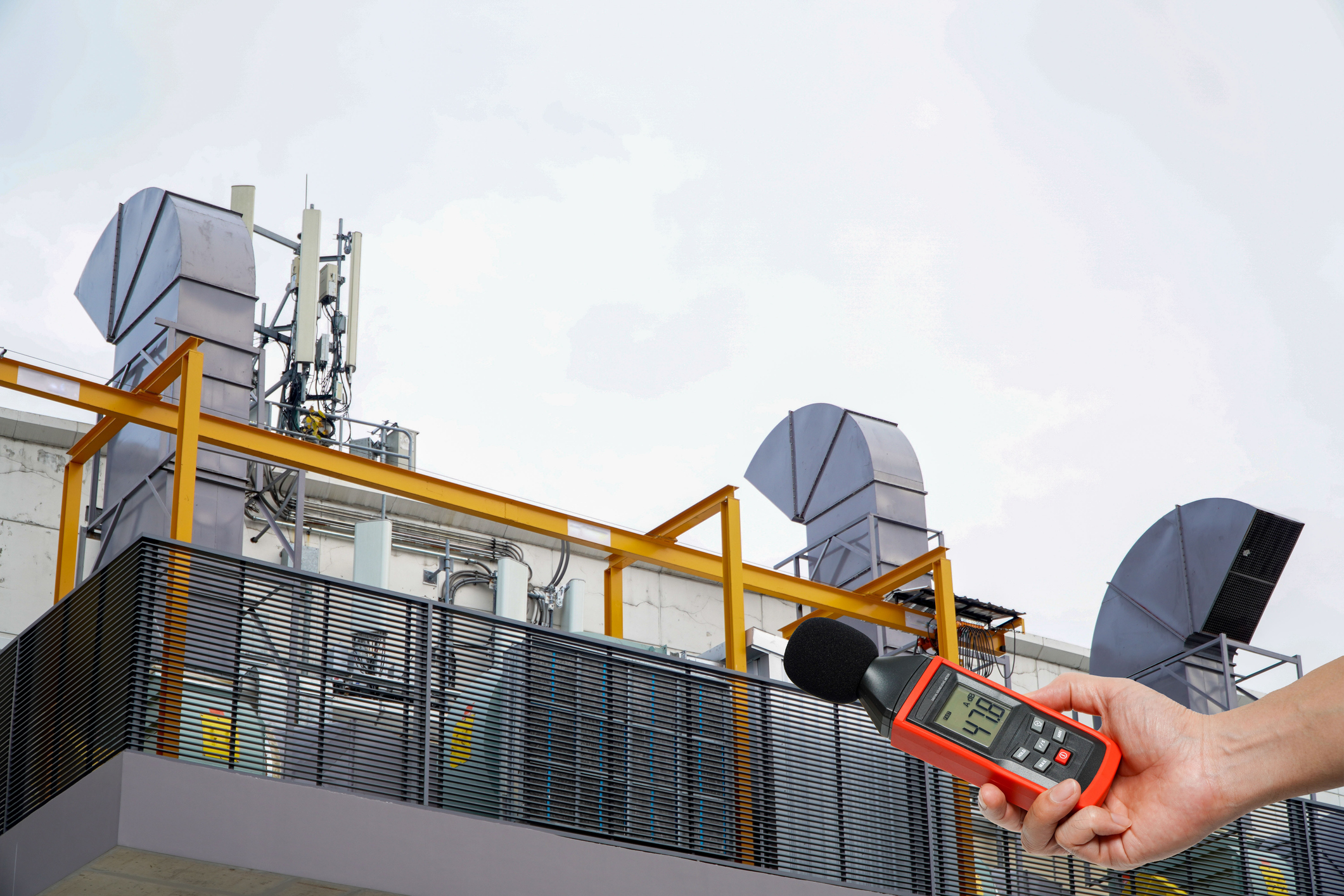
Noise can become a significant design issue where sensitive development is proposed near roads, commercial premises or industrial activity.
Unlike many air quality assessments, environmental noise work commonly involves site measurements to understand existing conditions.
The results can affect facade design, room arrangement, ventilation strategy, building orientation and outdoor amenity areas.
These are much easier to consider while the scheme is still being designed.
Daylight and sunlight
Development height, massing and proximity to neighbouring buildings can influence natural light.
Where a project has the potential to affect nearby residential properties, early daylight and sunlight analysis can identify which parts of the scheme may create the greatest effect.
This can help architects refine the proposal before submission rather than discovering a significant issue once objections have already been raised.
External lighting
Larger commercial, industrial, logistics and sports developments may require substantial external lighting.
Potential light spill, glare and other effects can often be reduced through good design, but this is easier if the assessment is carried out while luminaire positions, heights and specifications can still be changed.
Can environmental consultants help before a design is complete?
Yes.
A final design is not always necessary before useful environmental advice can be provided.
At an early stage, a consultant can review the site, surrounding land uses and broad development proposals to identify likely constraints.
This initial work may help answer questions such as whether detailed assessment will probably be required, what data will be needed and whether particular parts of the site could be more sensitive than others.
As the design progresses, more detailed assessment can then be undertaken using updated drawings and project information.
This staged approach can be particularly useful for larger developments.
It avoids unnecessary detailed work before the project is sufficiently developed, while still making sure that environmental risks are identified early enough to influence important decisions.
Can early environmental assessment reduce redesign?
Potentially, yes.
One of the main disadvantages of leaving environmental work until late in the planning process is that significant design decisions may already have been made.
Suppose, for example, that a residential development has been designed with bedrooms facing a nearby industrial source.
A later noise assessment might identify that this elevation experiences the highest industrial sound levels.
At that point, the project team may need to consider enhanced facade performance, alternative ventilation or changes to internal layouts.
Had the noise environment been assessed earlier, the design may have been arranged differently from the outset.
The same principle can apply to daylight, air quality and lighting.
Early technical evidence does not guarantee that redesign will never be necessary, but it can reduce the likelihood of avoidable late-stage changes.
Can early advice prevent planning delays?
It can reduce some common causes of delay.
Planning authorities need enough information to assess the environmental effects of a development. If an application is submitted without a report that the authority considers necessary, the applicant may later be asked to provide additional information.
This can extend the determination process.
Similarly, if a report is submitted but the scope does not adequately address the relevant issue, further technical work may be requested.
Early environmental input can help developers understand what is likely to be required before submission.
Where appropriate, it may also support pre-application discussions by providing a clearer technical basis for the proposed approach.
However, appointing a consultant early does not guarantee that the local planning authority will not raise further questions. Planning applications involve professional judgement, and requirements can differ between sites and authorities.
The benefit is that foreseeable issues are more likely to have been considered in advance.
When should consultants work with architects?
Environmental consultants can provide particular value while architects still have flexibility over the site layout and building design.
Rather than assessing a completed scheme in isolation, the consultant can explain where environmental constraints are concentrated and where changes could improve the proposal.
For example, acoustic analysis might identify quieter and noisier facades.
A daylight assessment might show that one part of a building causes most of the effect on neighbouring windows.
An air quality assessment might identify where exposure is most likely to require consideration.
Lighting analysis may reveal where external luminaires could create unwanted effects.
This gives architects evidence that can inform design choices.
The objective is not for the environmental consultant to design the development. It is to provide technical information that helps the wider project team understand the environmental consequences of different design decisions.
When should planning consultants involve environmental specialists?
Planning consultants can also help identify when specialist input should be brought into a project.
Where a planning authority is likely to consider a particular environmental issue material to the application, it is useful to establish the required evidence early.
Planning and environmental specialists can then work together to ensure that the technical assessment addresses the relevant planning questions.
This can also help keep reports proportionate.
Not every potential environmental issue requires extensive modelling or lengthy technical studies. A specialist can advise whether a more limited assessment is likely to provide sufficient evidence.
For development teams requiring several planning-related assessments, Hawkins Environmental’s environmental services provide further information on the areas of environmental assessment that can support development proposals.
Should a consultant be appointed before land is purchased?
For some sites, environmental advice before acquisition can be worthwhile.
This is most relevant where environmental conditions could have a significant effect on the development potential of the land.
A prospective residential site immediately beside a busy industrial premises, for example, may have important acoustic constraints.
Similarly, a tightly constrained site surrounded by existing properties could face daylight and sunlight considerations that affect achievable building height or massing.
Not every acquisition requires detailed assessment. However, where an obvious issue could influence whether the intended development is practical, proportionate specialist advice can help inform due diligence.
The earlier a potentially significant constraint is understood, the easier it is for the developer to factor it into commercial and design decisions.
What information should developers provide to the consultant?
Good environmental assessment depends on accurate project information.
The precise requirements differ according to the assessment, but consultants may need site plans, proposed layouts, building elevations, development descriptions, expected traffic information or operational details.
Providing current drawings is particularly important.
If an assessment is undertaken using an outdated layout and the development subsequently changes substantially, parts of the work may need to be reviewed.
Developers should therefore keep consultants informed when material design changes occur.
A clear understanding of project timescales is also helpful, especially where surveys, measurements or information from third parties are required.
What should developers look for when appointing an environmental consultant?
The consultant should have experience relevant to the type of development and environmental issue being assessed.
A consultant working on planning-related environmental assessments should understand both the technical methodology and how the findings are likely to be interpreted during the planning process.
Developers should also look for an approach that is proportionate to the project.
The aim should not automatically be to commission the most complicated possible assessment.
Equally, important issues should not be dismissed without sufficient evidence.
A useful consultant should be able to explain what work is required, why it is necessary and how the results could affect the development.
Clear communication is particularly important where several members of the project team need to understand technical findings.
Is it ever too late to appoint a consultant?
Environmental consultants are often brought into projects after the design is substantially complete or even after a planning authority has requested additional information.
An assessment can still be carried out at that stage.
However, the project team may have fewer options if the findings identify a significant issue.
Late appointment can also create programme pressure, particularly if measurements, updated traffic information or design revisions are required.
For this reason, developers should consider whether environmental constraints are foreseeable rather than waiting for the planning authority to identify them.
Where a potential issue is obvious from the location or nature of the development, earlier advice is usually the more practical approach.
Frequently Asked Questions
Do developers need an environmental consultant for every planning application?
No. The need for specialist environmental assessment depends on the development and site. Smaller or less sensitive projects may not require detailed work in areas such as air quality, noise, daylight or lighting.
Should environmental assessments be completed before the architect finishes the design?
Not necessarily, but environmental constraints should ideally be considered before the design becomes fixed. Early advice can identify issues, with more detailed assessment undertaken as the project develops.
Can one consultant deal with every environmental issue on a development?
Not necessarily. Environmental consultancy covers many different specialist disciplines. Developers should appoint consultants with relevant expertise in the particular assessments required for the project rather than assuming every environmental consultancy provides every service.
Appoint specialists when their advice can still influence the project
The most useful time to appoint an environmental consultant is generally before a potential environmental constraint becomes a planning problem.
For developments where air quality, environmental noise, daylight and sunlight or external lighting could materially influence the scheme, early advice can establish whether further assessment is required and identify issues while there is still time to respond.
This may be during site feasibility, early design or preparation of the planning application, depending on the project.
The important point is that environmental assessments should not always be viewed simply as reports produced at the end of the planning process.
Used effectively, they can provide technical evidence that informs design, supports planning decisions and reduces the risk of discovering foreseeable constraints too late.
Hawkins Environmental provides planning-related environmental consultancy for developments requiring air quality, noise, daylight and sunlight or lighting assessment. If you are considering a development and are unsure which assessments may be appropriate, contact Hawkins Environmental to discuss the site and proposed scheme.Phone: 01256 522332
Email: enquiry@hawkinsenvironmental.co.uk
Find out more: hawkinsenvironmental.co.